




General Information
Recreation Amid Ozark Splendor
Lake of the Ozarks State Park, the largest in the state park system with 17,626 acres, contains natural areas ranging from rugged, wooded areas to delicate cave formations and more than 80 miles of lake frontage. The park was established in the mid-1930s by the National Park Service and turned over to the state in 1946. Log buildings, rustic bridges and stone ditch-dams, built by the Civilian Conservation Corp, have placed the park and Highway 134, on the National Register of Historic Places.
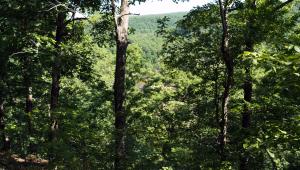
Located in the Osage River Hills, the park's hills and ridges are covered with dense oak-hickory forests, dotted with sunny, rocky openings called glades. Plants and animals such as the Indian paintbrush, Missouri evening primrose, six-lined racerunner and fence lizard have adapted to the glades' shallow soils and dry conditions. Wild turkeys, great blue heron, deer, fox, raccoon, owls, turkey vultures and bald eagles are among the wildlife making their homes in the forested hills surrounding the lake. During the summer months, park naturalists lead guided nature hikes and present evening nature programs.
Natural and wild areas are accessible by trail throughout the park. Open, grassy meadows, small springs and streams highlight the forest-covered hills of the 1,275-acre Patterson Hollow Wild Area. A self-guiding trail winds visitors through Coakley Hollow Fen Natural Area comprised of spring-fed streams, seeps, caves, fens, glades and deep valleys. Bluestem Knoll, an ecological stewardship management area, features an open woodland and prairie ground cover.
Twelve trails, ranging from one-half mile to 15 miles in length, lead visitors through dense oak-hickory forests and lush ravines, across sunny glades and along towering bluffs overlooking the lake. In addition to hiking and backpacking trails, the park has two equestrian trails, one of which offers bicycling. Trail rides are offered at the park stables for a nominal charge. An aquatic self-guiding trail marked with buoys on the Grand Glaize Arm of the lake is designed for boaters interested in learning about features along the shoreline.
On the south end of the park is Ozark Caverns, best known for its unusual formation of stalactites and waterfalls referred to as "Angels' Showers." With lantern in hand, visitors can view sleeping bats, bear claw marks and the speleological wonders as the first explorers did. For a nominal fee, guided tours are given on a daily basis during the summer.
As a water-based park, Lake of the Ozarks State Park offers excellent opportunities for water recreation. Two free public swimming beaches include bathhouses and shady picnic areas nearby. Boats can be rented for either fishing or skiing at the park's two marinas. Paved boat ramps are available.
For the overnight guests, more than 230 campsites, ranging from primitive to electric hookups, are available to campers year-round. Campground facilities include modern restrooms, laundry facilities and dumping stations. For a rustic experience without pitching a tent, eight primitive log cabins offer a quiet, secluded setting. Cabins are furnished with a wood-burning stove, table and chairs, three double beds and barbecue grill. A central showerhouse and restroom is situated close to the cabins. Both the campground and cabins offer accessibility to persons with disabilities.
Four organized group camps, accommodating between 40 and 200 campers, include sleeping cabins, modern restrooms, a dining lodge with kitchen, a playcourt area and a designated swimming area. Reservations for the group camps must be made in advance.