





Historic Site Plans
WATKINS WOOLEN MILL STATE PARK AND STATE HISTORIC
SITE
Conceptual Development Plan
November 2001
Established: 1964
Size: 1,442 acres
Location: Clay County
PREAMBLE
MISSION STATEMENTThe Mission of Watkins Woolen Mill State Park and State Historic Site is to preserve and interpret the historic structures and surviving remnants, cultural landscapes, and relevant artifacts associated with the mill, plantation, and the Watkins family, with emphasis on the last half of the 19th century. Recreational opportunities consistent with the facilities historic character and carrying capacity of the property will be provided.
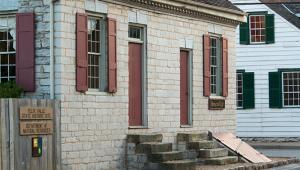
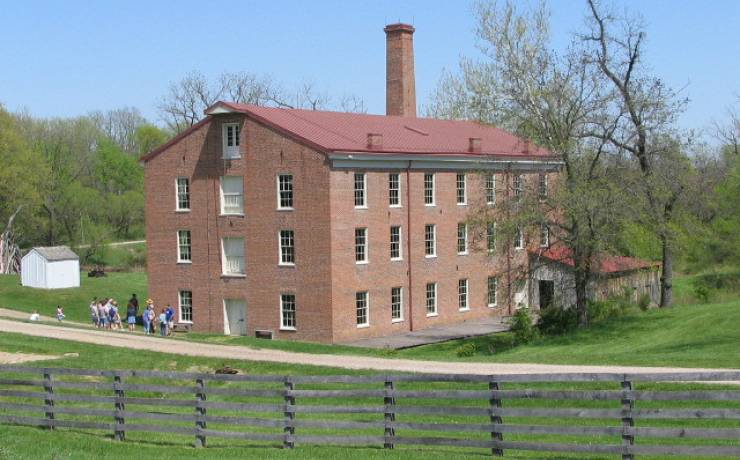
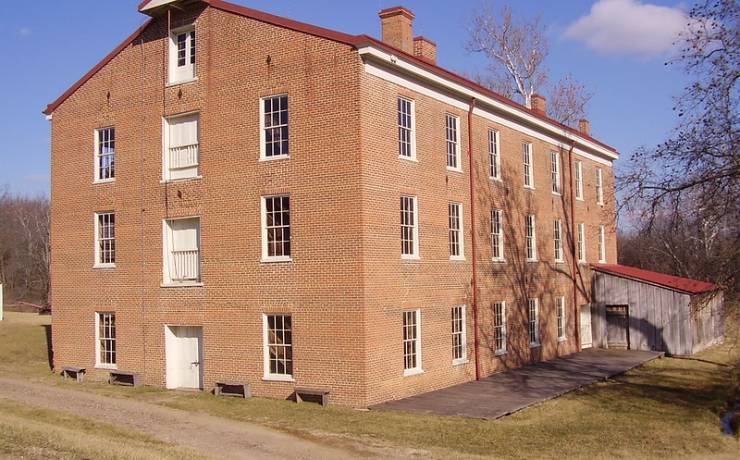
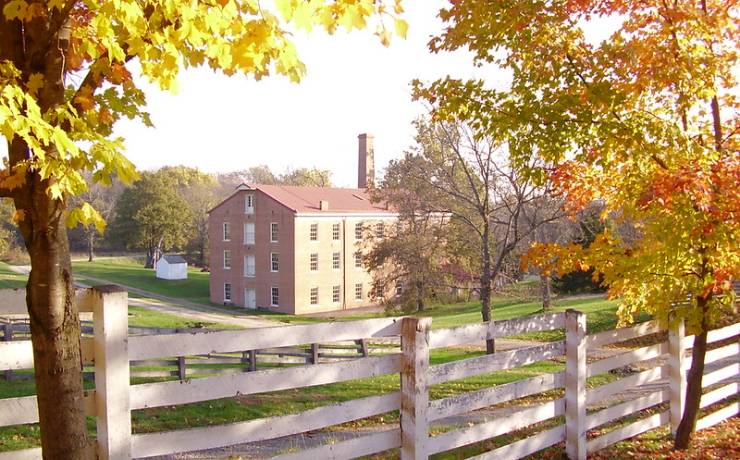
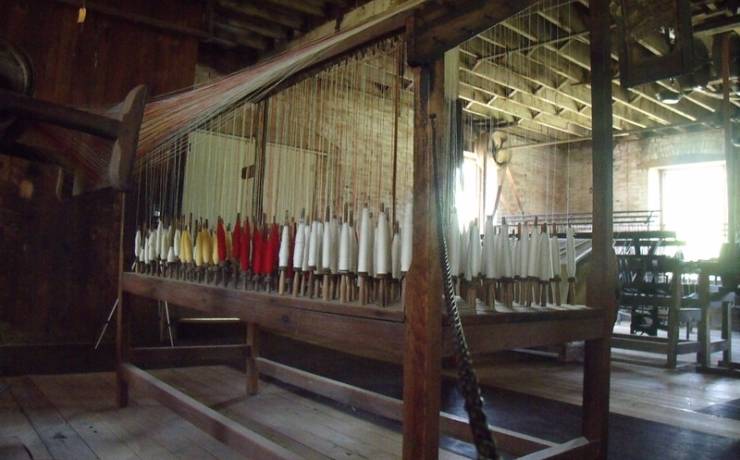
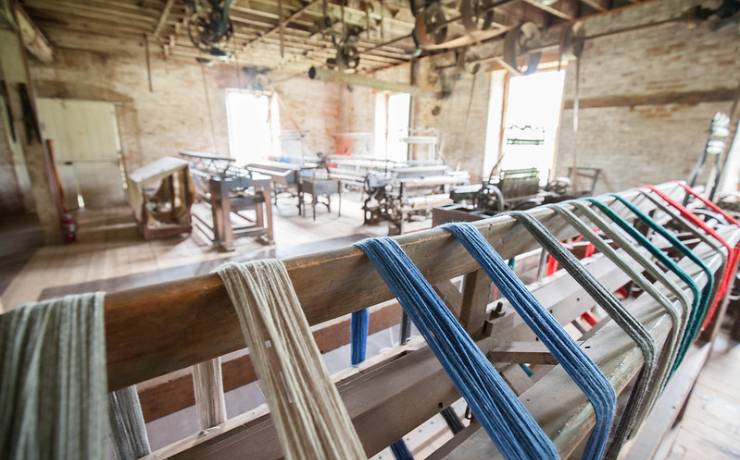
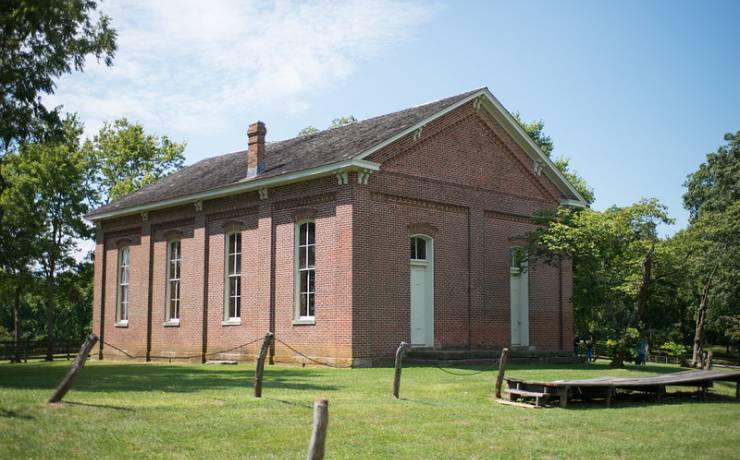
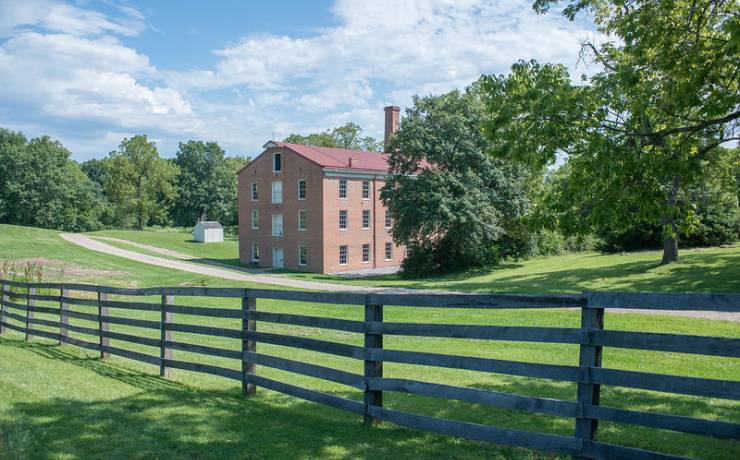
INTRODUCTIONWatkins Woolen Mill is a National Historic Landmark and a National Mechanical Engineering Landmark, as well as a Clay County Historic Landmark. The woolen factory is the only one of over 2,400 textile mills operating in North America in 1870 that still contains its original machinery and equipment. As such it is a very important historic document of 19th century life, working conditions and industrial technology. Its value is enhanced by the preservation of Watkins' Bethany farm, Mt. Vernon Church and Franklin Academy.
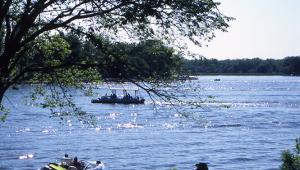
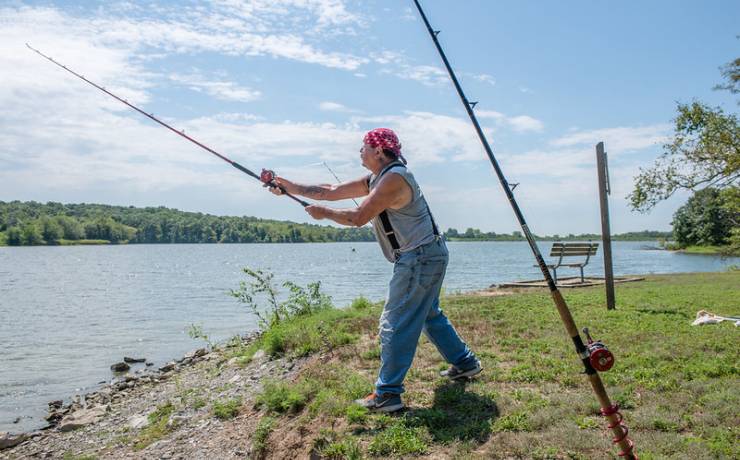
In 1963 Clay county voters passed a $184,000 bond issue to buy the Watkins property and turn it over to the Missouri Park Board. Watkins Woolen Mill State Historic Site entered the Missouri Park System on January 1, 1964. The site now comprises 1,442 acres. This tract contains the Watkins' Bethany Farm, woolen mill and associated historical structures and archeological features; a visitor's center; a 100-acre lake; a campground, beach area, 3 picnic areas, shelter, launch ramp, scout area and a 3.75 mile trail. The Division of Youth Services leases an 18-acre tract for a minimum-security facility.
DEVELOPMENT GOALS- Preserve the historic structures and surviving remnants, cultural landscapes and relevant artifacts associated with the mill, plantation and the Watkins family to enhance public enjoyment, understanding and appreciation of the site
- Provide adequate administrative, operational and maintenance support facilities to protect, secure and maintain the resources of the site
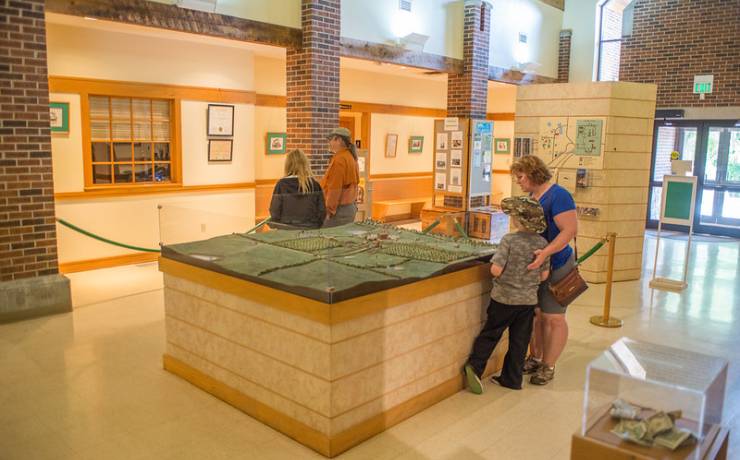
- Provide adequate visitor orientation and interpretive facilities to enhance the public's understanding, appreciation and enjoyment of the resources of the site
- Provide recreation and public use facilities and structures that are compatible with the mission of the site
Historic Zone
Reconstruct Mule Barn and
Corral
Mule barn and corral will be reconstructed to house period
farm equipment and a period workshop. Mule barn
reconstruction will require archeology.
Reconstruct Period Privy
Reconstruct period privy shell that will be set on a vault
base that meets environmental and health regulations, by
Watkins home for public use.
Restore Mill Ponds
Dredge and reseal the bottoms of the millponds and repair
dams.
Stabilize/Conserve Woolen Mill
Machinery
Machinery, equipment and tools will continue to receive
conservation treatment and enhancements to preserve and to
aid in interpretive efforts. Due to the fragile and rare
nature of the mill equipment, no attempt will be made to make
the machinery operable. See Appendix for supporting
documentation.
Continue the Restoration and Preservation of
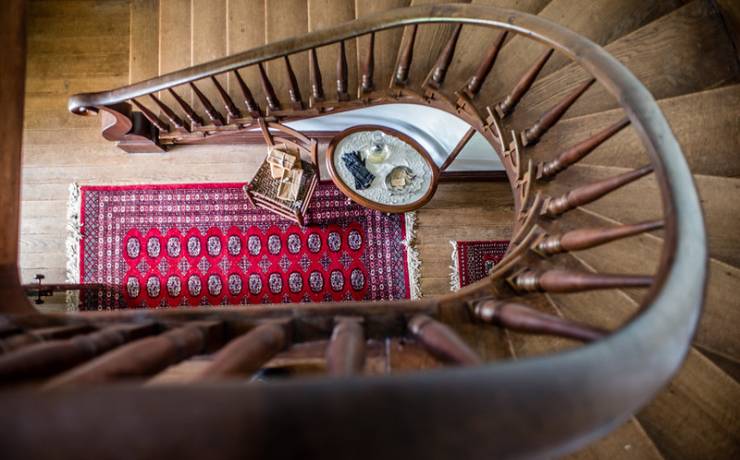
the Watkins House
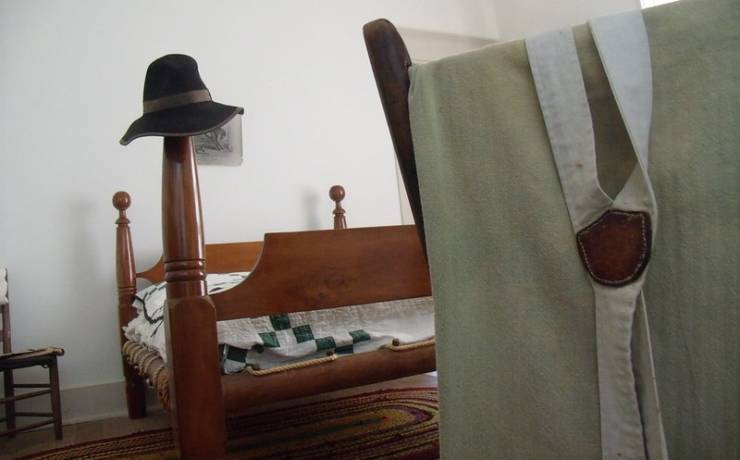
Efforts will continue with the house restoration and
preservation to more accurately represent its appearance in
the late 1870s. Some specific tasks will include
tuck-pointing; replacing the second floor west window sills;
removing the modern floor in the winter kitchen; repairing
and refinishing the woodwork, hardware, floor and fireplace
repair; restoring the basement including tuckpointing,
whitewashing, repairing shelving and doors and removing or
replacing all exposed or inappropriate wiring and plumbing;
rebuilding the back porch columns; repairing box-stoves and
other needed repairs as required.
Historic Area Preservation
Preserve, stabilize and enhance the foundations and features
related to the Workers Cabins, Sawmill Site, Scale House,
Wool Shed, Blacksmith Shop and William Waer's House. Continue
research to further define these locations and to interpret
these features.
Watkins Yard Restoration
Unearth and refurbish historic stepping stone path from
Watkins house to Mule Barn.
Remove Red Barn
Red Barn (circa 1950s) to be removed.
Remove Wash House
Wash House (circa 1950s) to be removed.
Day-Use Area in Historic
Zone
The day-use area in the Historic Zone that has been
considered temporary will be designated permanent to house
the vault toilets and picnic tables currently there. No
shelters or other day-use facilities will be developed in
this area. The old sawmill and related structures in the area
will be interpreted.
Stabilize Germann Farm Barn and
Fields
Stabilize as a service support area for facility operations
and occasional special event staging. The root cellar and
Farrowing House will be removed. If future development of
this facility includes a living history farm program, this
area could be used to support it. Any modifications to this
area need to consider this possible future use.
Recreation Area
Expand Equestrian Trail
Equestrian trail will be expanded to the south of the
existing trail and parking area. This expansion is contingent
upon the acquisition of adjacent land (Acquisition #2).
Trail Link
Link the park trails with the Northland Trail System (a
proposed inter-county network system) when this system is
developed.
Construct Overlook
An overlook will be constructed along the existing bike
trail at the waterfall location.
Construct Wildlife/Bird Viewing
Area
Construct an addition onto the North side of the visitor
center to house a wildlife/bird viewing area.
Expand South Day-Use Area (Shelter
Area)
Expand parking to accommodate shelter and day-use
activities. Construct new vault latrine and horseshoe
pits.
Beach Access
Beach access will be reconfigured to accommodate Americans
with Disabilities Act (ADA) concerns.
Interpret the Missouri Valley Fox Hunt
Kennel's Features
Located in the recreation area, the Missouri Valley Foxhunt
Kennel features will be defined and interpretation will be
provided.
Upgrade Williams Lake Dam
Structure
Due to increased housing below Williams Lake Dam, the
Department of Natural Resources' Dam and Reservoir Safety
Program recommended that the emergency spillway be widened
and possibly armored. A study needs to be undertaken in order
to access this need and may require additional projects to
bolster the strength of the spillway.
Special-Use Camp
Expand Special-Use Camp
Enlarge parking lot to accommodate approximately thirty
vehicles, add water line and play-field.
Campground
Improve Campground
The campground will be renovated by removing sites that have
deteriorated and are causing resource damage. These sites
will be replaced in a new campground development adjacent to
the existing campground (Acquisition #3). In addition to the
relocated campsites, a modest amount of new campsites will
also be developed. The number of additional campsites will be
determined by site conditions.
Service Area
Expand Service Complex
The service area will be expanded to incorporate the current
superintendent's residence. The residence will be converted
to historic collection storage. An equipment storage facility
will be constructed and the sewage system will be upgraded in
the complex and additional landscaping will screen this
area.
Park Residences
Renovate Germann Farm
Renovate Germann Farmhouse to provide a state residence.
Major's Residence
Sell the Major's residence (house only) with a protective
covenant and move it off site. The land on which the
residence currently sits will remain within the facility's
boundaries.
Other
Railroad Overpass and Removal of
Road
An overpass will be constructed that will connect the Main
Park Road over the railroad to the Park Road North just
across from the current superintendent's residence and
current Division of Youth Services (DYS) gate. This will be
followed by the removal of the section of the Main Park Road
between the north picnic area and old Bethany Road. This
project will allow public access to the visitor center via a
route that lessens the impact to the Historic Zone and avoids
the vehicle height limit for emergency equipment at the
current underpass. A relocated historic bridge is
preferred.
Contact Station and Removal of Brown
Barn
Construct contact station at the South Park entrance and
remove non-period brown barn (circa 1960).
Division of Youth Services
Camp
Land surrounding Watkins Woolen Mill has become increasingly
expensive and more developed, which is limiting opportunities
to expand the land base. The current cooperative agreement
between the division and DYS has diminished so that the park
receives extremely limited, if any services from DYS, while
DYS continues to expand its number of structures, residents,
and staff. This expansion affects the park as traffic
increases wear and tear on roadways, and while the level of
detention is to include only nonviolent offenders, the
potential remains for increased liability to park visitors,
staff and facilities whenever clients runaway. DYS will be
encouraged to vacate the camp upon the expiration of the
Memorandum of Understanding in 2016. The area will be
converted to an Organized Group Camp.
Bury Power Lines
Bury power lines in Section 10 of Historic Zone to restore
historic viewshed.
Acquisition of 80 Acres adjacent to Historic
Zone (Acquisition #1)
Acquire 80 acres adjacent to the millponds to provide needed
buffer to the historic zone's northern border. The proximity
of this tract to the mill and the threat of a significant
impact upon this setting should this tract be developed,
makes this acquisition the highest priority acquisition. It
will provide viewshed and watershed protection.
Acquisition of 65 Acres south of Equestrian
Parking Area (Acquisition #2)
Acquire 65 acres south of the Equestrian parking area to
provide an expansion area for new equestrian trails.
Acquisition of 97 Acres Adjacent to the
Campground (Acquisition #3)
Acquire 97 acres on the campground's southern border for
campground improvements.
Acquisition of 230 Acres to the West of the
Park (#4)
Acquire 230 acres to the west of the park for viewshed
protection and buffer.
Special Note Regarding Acquisitions/Purchase
Units
Acquisitions will be pursued through willing sellers.
Research and Archaeology
Research and archaeology will be an ongoing activity at the
site; especially as it relates to development projects
proposed in this plan and enhances interpretive efforts and a
basic understanding of the site.
Interpretive Plan
The Interpretive Plan will be completed to address all
interpretive issues at the site.
Cultural Resources Plan
The Cultural Resources Plan will be completed to address all
cultural resources of the site.
Natural Resources Plan
The Natural Resources Plan will be completed to address all
natural resources of the site.
Development Phasing
Development Phasing will be completed after the plan is
approved.
|
Click on the drawing to view a larger version.
Plan Page 1 of 2 |
|
Plan Page 2 of 2 |
APPROVED BY:
| (Douglas K. Eiken) | Date: 12/18/01 |
| Director, Division of State Parks (Deborah Schnack) |
Date: 12/18/01 |
| Director, Planning and Development Program (Jim Rehard) |
Date: 12/14/01 |
| District Supervisor, Northern Missouri Historic
District (Michael D. Beckett) |
Date: 12/10/01 |
Site Administrator, Watkins Woolen Mill State Historic Site
APPENDIX
Members of the CDP Team
Mike Beckett, Site Administrator, Watkins Woolen Mill State
Park and State Historic Site
Lisa Dillon, Architect, Planning and Development
Program
Stan Fast, Natural Resource Manager, Operations and Resource
Management Program
Richard Forry, Assistant District Supervisor, Northern
Missouri Historic District
Jim Rehard, District Supervisor, Northern Missouri Historic
District
Booker H. Rucker, Director, Cultural Resource Management
Program
Debbie Schnack, Director, Planning and Development
Program
John Spencer, Cultural Resource Preservationist,
Interpretation Program
Ron Sutton, Park Superintendent, Watkins Woolen Mill State
Park and State Historic Site
Note: Ann Sligar, former Site Administrator, Watkins
Woolen Mill State Park and State Historic Site participated
on the CDP team from its' initiation in December 1999 through
October 2000.
Matthews, Ann M (1986). Why We Decided Not To Demonstrate Process at Watkins Mill. Proceedings of the 1986 Association of Living History Farms and Agricultural Museums Conference, Connor Prarie, Nobelsville, IN, 67-72